
ROBOTICS & HUMANOID ROBOTS
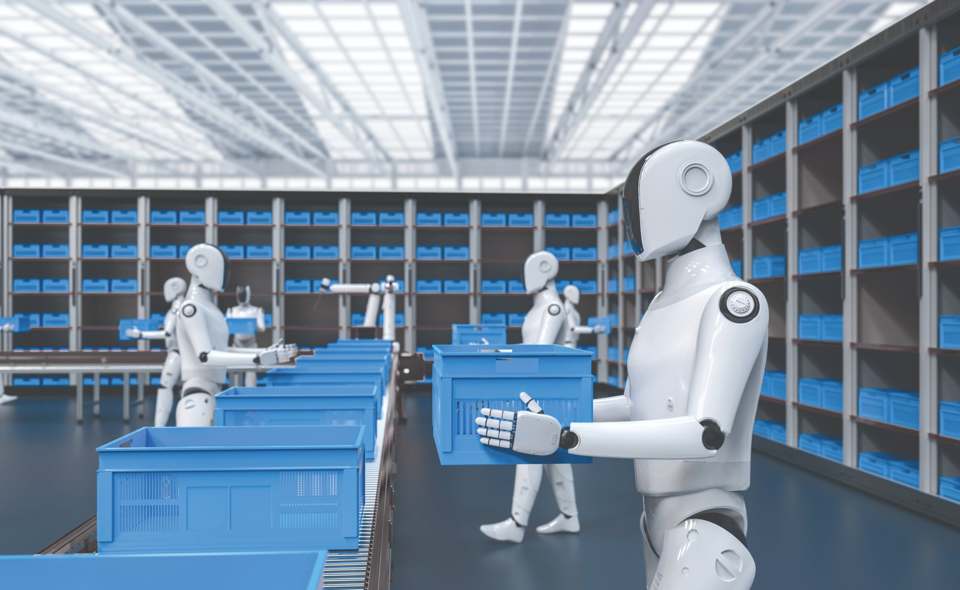
Robots are leaving their fences. Collaborative robots work next to operators, mobile manipulators and autonomous mobile robots move through warehouses and hospitals, service robots meet the public, and humanoid and legged robots are entering factories, logistics and care. They carry loads, use tools built for human hands and increasingly learn their behaviour from data. For safety and certification this is new ground: robots that keep their balance only while powered, that work without fences next to people, that are connected to the cloud and whose control policies are trained rather than programmed.
CertX combines functional safety, cybersecurity and artificial intelligence in one team. As a Swiss certification body, Notified Body NB 2948 under the Machinery Directive and part of SGS, we support robot manufacturers, system integrators and operators, and the developers, importers and distributors of humanoid robots, in bringing robots to the European market and into real workplaces safely.
For safety components and machinery in general, see our page Industrial Machinery.
From the first risk assessment to CE marking: one partner for the safety, security and AI of your robot.
What applies to robots in Europe
A robot, a robot cell or a humanoid robot placed on the EU market is machinery; a robot arm sold on its own is usually partly completed machinery. Several regulations apply at the same time, on different dates:
- Machinery Regulation (EU) 2023/1230, applicable from 20 January 2027, replaces the Machinery Directive 2006/42/EC. Machinery whose safety functions rely on fully or partially self-evolving behaviour using machine learning is listed in Annex I, Part A and needs a notified body.
- EU AI Act (EU) 2024/1689, as amended by the Digital Omnibus (EU) 2026/1744: for machinery, AI-specific health and safety requirements are to be added to the Machinery Regulation by August 2028. Transparency obligations and general-purpose AI rules already apply.
- Cyber Resilience Act (EU) 2024/2847: vulnerability and incident reporting from 11 September 2026, all requirements from 11 December 2027.
- Radio Equipment Directive delegated act (EU) 2022/30 for connected robots, with the EN 18031 series, applicable since 1 August 2025.
The standards are moving just as fast. ISO 10218-1 (industrial robots) and ISO 10218-2 (robot applications and cells) were revised in 2025 and now include the collaborative robot requirements of ISO/TS 15066. ISO 3691-4 covers driverless industrial trucks and mobile robots, ISO 13482 personal care and service robots, and ISO 25785-1, in development, is the first safety standard for industrial mobile robots with actively controlled stability such as legged and humanoid robots.
CertX helps you map which of these apply to your robot and its use cases, and builds a single compliance plan instead of one project per regulation.
When do you become the manufacturer?
Importing or reselling a robot, especially a humanoid robot made outside Europe, can make you legally responsible for it as if you had built it. Under the Machinery Regulation (MR) and the Cyber Resilience Act (CRA), the obligations of the manufacturer apply to anyone in one of these situations:
You design the robot or have it made and sell it under your name, or you build it for your own use.
You place a robot made by someone else on the market under your own name or trademark (white label, OEM).
A hardware or software change not foreseen by the manufacturer that creates a new hazard or increases a risk: new tools or payloads, higher speeds, new AI skills or models in safety functions.
You adapt the robot to a use its manufacturer did not foresee, for example a research or demo robot deployed in a warehouse or in public areas. The new risk assessment usually leads to a substantial modification.
You combine robots, grippers, conveyors and safeguards into a robot cell or a line: you are the manufacturer of the assembly.
- Risk assessment (EN ISO 12100)
- Technical documentation
- Conformity assessment, with a notified body where required
- EU declaration of conformity and CE marking
- Instructions in the users’ language
- Security updates and vulnerability handling
- Post-market monitoring
Typical cases: a distributor selling an imported humanoid robot under its own brand, a developer installing its own AI skills on a purchased robot platform, or an integrator building a robot cell. CertX reviews your situation, the manufacturer’s documentation and your planned modifications, and tells you which obligations apply before you place the robot on the market.
Notified Body NB 2948: EC Type-Examination
CertX is Notified Body NB 2948, listed in the EU NANDO register, for the EC type-examination (Annex IX) of two categories of the Machinery Directive 2006/42/EC, Annex IV:
- 19. Protective devices designed to detect the presence of persons
- 21. Logic units to ensure safety functions
Typical products are safety laser scanners, light curtains and other person-detection systems, safety relays, safety PLCs and the safety controllers of machines, robot cells and robots. Under the Machinery Regulation (EU) 2023/1230, both categories are listed in Annex I, Part B: if your product does not fully apply the harmonised standards, a notified body must be involved.
We review your risk assessment according to EN ISO 12100, identify the applicable harmonised standards and verify that the essential health and safety requirements are met, including the requirements of the Machinery Regulation on autonomous mobile machinery, human–robot interaction, psychological stress and protection against corruption.

Start early: a gap analysis during design avoids costly changes to hardware, control architecture and safety concept just before market launch. You receive a clear list of findings without disclosing your IP to third parties.
Functional Safety for Robots and Humanoids
Every robot application depends on safety functions that work: safeguarding of robot cells, speed and separation monitoring and power and force limiting for collaborative robots, safe navigation for mobile robots. Humanoid robots add hazards that fixed industrial robots do not have: a fall or loss of balance, a safe stop that must not make the robot collapse, contact with people at any height and carried payloads. CertX assesses and certifies these safety functions according to IEC 61508, EN ISO 13849-1, IEC 62061, ISO 10218, ISO 3691-4 and the emerging ISO 25785-1, with an independent assessment of the parts your project needs.
System and safety concept:
- Hazard analysis and risk assessment for each use case and environment
- Stability, fall and controlled-stop scenarios
- Safety requirements and performance levels (PL) or SIL
- Human–robot interaction: speed and separation monitoring, power and force limiting
- Payload, tool and gripper risks
Hardware:
- Safety architecture of actuators, joints, drives and brakes
- Failure rates, diagnostics and fault tolerance
- Safe torque off and safe stop functions
- Battery and power management
- Safety sensors and safety-rated communication
Software:
- Safety controller and safety functions
- Separation between AI-based motion control and the safety layer
- Requirement traceability, verification and tests
- Simulation, test bench and field validation
- Software update and change impact analysis
Functional Safety Management:
Safety lifecycle, organisation and competencies, supplier management and the safety case are assessed as for any machinery: see the full scope on our Industrial Machinery page and our Functional Safety & RAMS services.
Cybersecurity for Connected Robots
A modern robot is a connected product: remote monitoring, fleet management, teleoperation, over-the-air updates and cloud-based AI services. An attack on these interfaces can become a safety problem. The Machinery Regulation now requires protection against corruption, and the Cyber Resilience Act and the Radio Equipment Directive add product cybersecurity obligations.
The CertX Cyber Security team supports robot makers with:
- Threat analysis and risk assessment covering the robot, its apps, the fleet backend and the update chain
- Compliance check and certification against IEC 62443-4-1 (secure development) and IEC 62443-4-2 (component requirements), EN 18031 and the CRA
- Technical evaluation and testing of your robot and its interfaces
- Supporting services for vulnerability handling, SBOM and secure update processes

Artificial Intelligence in Robotics
Perception, navigation, grasping and task planning in robots, and locomotion in humanoids, increasingly rely on neural networks and foundation models. CertX evaluates whether these AI components are robust, reliable and kept under control by the safety architecture, using the CertX AI assessment and certification scheme.
- AI assessment of perception and control models: data quality (ISO/IEC 5259), robustness (ISO/IEC 24029), functional safety and AI (ISO/IEC TR 5469), controllability (ISO/IEC TS 8200)
- Machine learning in safety functions: assessment and evidence for the conformity assessment required by the Machinery Regulation
- AI management system certification according to ISO/IEC 42001
- Supporting services to prepare for the EU AI Act and the coming AI requirements for machinery

Training & Person Certification
Qualify the engineers and managers who design, integrate, import and operate robots and humanoid robots. CertX offers Red Belt courses with exam and personal certificate:
- ISO 13849 Functional Safety – Red Belt
- IEC 61508 Functional Safety – Red Belt
- ISA/IEC 62443 Cybersecurity – Red Belt
- EU AI Act – Red Belt
CertX experts also provide in-house training tailored to your robot, for example on the Machinery Regulation and CE marking. See the training page for dates and venues and our person certification process.
See more details about our assessment process or our certification process.
Frequently asked questions
Is a robot arm machinery or partly completed machinery?
A robot arm sold without its end effector and application cannot perform a specific application on its own, so it is usually partly completed machinery: it comes with a declaration of incorporation and assembly instructions. The integrator who builds the robot cell is the manufacturer of the complete machinery and affixes the CE marking.
Am I the manufacturer if I import a humanoid robot?
Not by importing alone. You take on the obligations of the manufacturer if you place the robot on the market under your own name or trademark, or if you substantially modify it (Machinery Regulation Art. 17 and 18, CRA Art. 21 and 22). Otherwise, as importer, you check the conformity assessment, the CE marking, the declaration of conformity and the instructions, and add your name and address.
Does the EU AI Act apply to my robot?
For machinery, the AI-specific health and safety requirements are to be added to the Machinery Regulation by August 2028, as provided by the Digital Omnibus (EU) 2026/1744. Transparency obligations and the rules on general-purpose AI models already apply. From 20 January 2027, machine learning with self-evolving behaviour in safety functions requires a notified body under the Machinery Regulation.
Which standards apply to humanoid robots?
There is no harmonised standard for humanoid robots yet. Depending on the use case, ISO 10218-1 and -2 (industrial settings), ISO 3691-4 (mobile operation) and ISO 13482 (personal care robots) apply, with EN ISO 13849-1 or IEC 62061 for safety functions and IEC 62443 or EN 18031 for cybersecurity. ISO 25785-1, in development, will cover robots with actively controlled stability.
CONTACT US
Contact us for more information about our services for robotics and humanoid robots.